Automotive Franchise Opportunities: Types, Pros & Cons, and How to Choose the Right One

Request More Info

If you’re searching for automotive franchise opportunities in Australia, you’re not just choosing a brand. You’re choosing a business model.

Some automotive categories are built on high volume and operational speed. Others are built on premium pricing, quality control, and upsell ladders. While some require specialised labour and heavy compliance, others are simpler to staff and standardise.

This guide breaks down:

  • The major types of automotive franchises
  • The pros and cons of each
  • What “most profitable” really means
  • How to choose the right opportunity for your goals

If you want the due-diligence framework first, start here: How to tell a great opportunity from a risky one

And if you want a broader list of car business models (not only franchises): Car business ideas with pros and cons
What Types of Businesses are Considered “Automotive Franchise Opportunity”?

Most automotive franchise opportunities fit into these buckets:

  1. Repair and maintenance (general repair, brakes, diagnostics)
  2. Logbook servicing and mobile mechanics
  3. Tyres and wheel services
  4. Collision and body
  5. Car wash
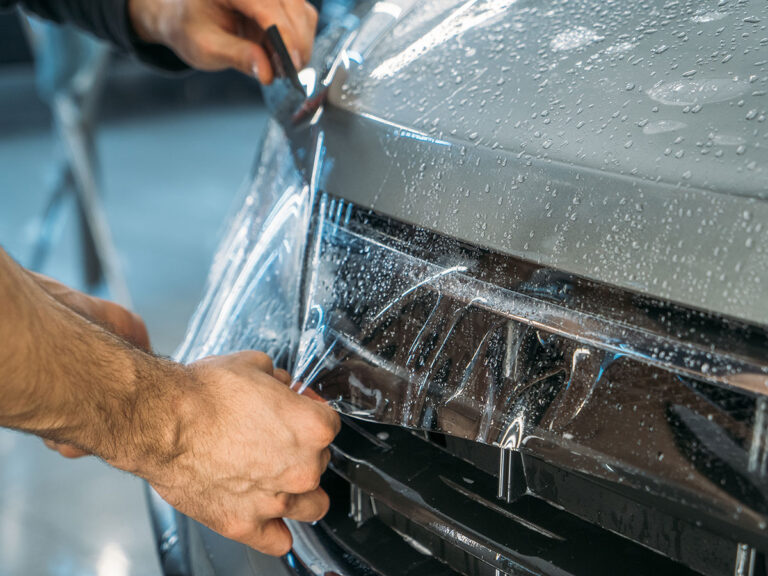
  6. Detailing and appearance (tint, PPF, coatings, wraps, detailing)
  7. Glass and windshield services
  8. Accessories and electronics (audio, remote start, restyling)
  9. Fleet, dealership and B2B-focused service models

Your category choice affects:

  • Startup cost and buildout intensity
  • Staffing difficulty and wage pressure
  • Margins and rework risk
  • Repeat customer frequency
  • Seasonality and demand stability
  • Upfront investment in space, equipment, etc.

The 6 Types of Automotive Franchises That Matter Most (Pros + Cons)

1. Repair & Maintenance Franchises

Pros:

  • Consistent “need-based” demand
  • Repeat customers and long-term retention
  • Essential category strength

Cons:

  • Skilled labour is harder to recruit/retain
  • Diagnostics and tooling add complexity
  • Consumer trust can be harder to earn without a strong brand

2. Logbook servicing and mobile mechanics

Pros:

  • High transaction volume potential
  • Repeat service cadence tied to manufacturer schedules
  • Strong local search demand

Cons:

  • Operational speed and process discipline required
  • Price competition from dealers and independents
  • Qualified mechanic shortages in many regions

3. Tyres & Wheel Services

Pros:

  • Essential need-based category
  • Opportunities for upsells (alignment, rotations, packages)
  • Strong local SEO demand

Cons:

  • Equipment investment can be meaningful
  • Inventory management complexity
  • Competitive pressure in saturated markets

4. Collision & Body

Pros:

  • High ticket sizes
  • Insurance-driven demand
  • Strong revenue per job when managed well

Cons:

  • Complex cycle times and customer expectations
  • Compliance and shop management intensity
  • Staffing and specialised skills required

5. Car Wash

Pros:

  • Strong membership model potential
  • Scalable unit economics with strong site selection
  • Operational standardisation

Cons:

  • Site selection is everything
  • Buildout can be capital intensive
  • Competition can be intense in some regions

6. Detailing & Appearance (Tint/PPF/Coating/Wraps)

Pros:

  • Premium positioning potential (when quality is consistent)
  • Strong upsell ladder (tint, premium tint, PPF/coatings)
  • Photo/review-driven marketing works extremely well
  • Services often solve comfort + protection (not just “need”)

Cons:

  • Quality control matters (rework kills margin)
  • Training and consistency are non-negotiable
  • Premium pricing requires trust signals and a clean customer experience

If you’re interested in starting a tinting business specifically visit: how to start a window tinting business in Australia

“Most Profitable” Automotive Franchises

It’s tempting to assume that certain automotive franchise categories are automatically more profitable than others. Two brands in the same category can perform completely differently, because profitability is driven by the operating model behind the service, not the service itself. The franchises that tend to outperform have a few fundamentals in common:

  • Pricing power (not purely commodity competition)
  • Operational repeatability (quality and workflow)
  • Controlled labour complexity
  • Predictable marketing that converts
  • An upsell ladder that customers actually buy
  • Transparency and support that reduce trial-and-error

A category can be hot and still be a risky investment if:

  • Economics are vague
  • Support is thin
  • Territory ownership is unclear
  • Franchisees aren’t succeeding consistently

Use the “great vs risky” framework to better understand your options: great vs risky opportunity checklist

How to Start an Automotive Business (Franchise Path)

Most buyers succeed when they follow a structured path:

1. Choose your role:

  • Owner-operator
  • Manager-run
  • Multi-unit long-term plan

2. Choose category based on:

  • Labour availability in your market
  • Your appetite for complexity
  • Investment comfort level
  • Whether you want premium upsells vs high volume

3. Compare brands in the same category:

  • Unit economics clarity
  • Training depth
  • Marketing support
  • Operational systems

4. Review the disclosure document:

  • Total investment, franchise fee and establishment costs
  • Ongoing fees, marketing fund contributions and any required spend
  • Territory definitions and what is protected
  • Any significant capital expenditure you may be required to make during the term, which the franchisor must now disclose and discuss with you
  • Any earnings information the franchisor chooses to provide, and the basis on which it was prepared
  • Contact details for current franchisees and franchisees who have left the network

5. Validate with franchisees:

  • Talk to multiple owners (The disclosure document lists current and former franchisees. The Franchising Code of Conduct requires this so you can speak with them.)
  • Ask about ramp time, staffing, support responsiveness, and marketing reality

6. Build a launch plan:

  • Location and buildout timeline
  • Hiring plan
  • Marketing and lead response plan
  • Customer experience SOPs

A structured franchise path works because it forces you to make the big decisions in the right order; starting with your role and category fit, then validating whether the brand’s unit economics, training, marketing support, and operating systems match how you actually want to run the business. By the time you reach the disclosure document and franchisee validation steps, you’re pressure-testing investment, territory, support, and real-world ramp expectations with the people living it.

To see how Black Optix Tint frames the investment in Australia, visit: investment snapshot

Pros and Cons by Category (Quick Comparison)

  • Repair/maintenance: strong demand; harder labour
  • Quick lube: high volume; speed/process pressure
  • Tyres: essential; inventory complexity
  • Collision: high ticket; operational complexity
  • Car wash: scalable; site selection/buildout heavy
  • Appearance (tint/PPF/coatings): premium margins possible; quality control critical

Your “best” choice is the one that matches your constraints and goals, not the one with the flashiest marketing.

The Questions That Separate “Best Automotive Franchise Opportunities” From the Rest

Ask these:

Economics:

  • Can they clearly explain unit economics without dodging?
  • Do you understand ramp time and break-even realities?

Operations:

  • How do they train techs and enforce quality?
  • What happens after training week?

Marketing:

  • What marketing is included vs optional?
  • What systems exist for lead response and conversion?

Territory:

  • What is protected?
  • What prevents overlap?

Support:

  • Who is your day-to-day contact?
  • How often do they coach owners?

Exit value:

  • Is the model manager run capable?
  • Is there evidence of multi-unit growth?

If You’re Comparing Automotive Categories, Don’t Ignore “Trust”

In automotive, customers are trusting you with:

  • Safety (their vehicle)
  • Money (often unexpected expenses)
  • Time (drop-offs, appointments)

The categories that win tend to have:

  • Clear online proof (reviews, photos)
  • Consistent customer experience
  • Reliable scheduling and communication
  • Strong warranties and simple explanations

That’s why reputation systems matter as much as the service itself.

Get Started

Want to explore a premium appearance-focused opportunity?

FAQ

The best options fit your goals, market, labour realities and desired complexity, supported by transparent disclosure and real support systems.

Profitability depends on pricing power, operational repeatability, labour and marketing conversion, more than category hype.

Repair, logbook servicing, tyres, collision, car wash, detailing and appearance, glass, accessories and electronics, and fleet models.

Use the due diligence checklist: great vs risky checklist